Building a Resilient Campus for the Future
Rising temperatures due to climate change calls for an integrated approach to sustainable campus planning to mitigate urban heat, manage rising carbon emissions from campus expansion, and enable habits and behavioural change.
Under the NUS Campus Sustainability Roadmap 2030, the university is used as a living laboratory to achieve its ambitious sustainability targets — where campus infrastructure and grounds are not just used to respond to sustainability challenges but also actively tapped on to develop solutions that can be scaled beyond campus boundaries.
Designing for Climate Resilience
On campus, the average daytime temperature rose by 0.42 deg C between 2020 and 2025. To address this, the University Campus Infrastructure (UCI) is strengthening its longer-term climate-responsive planning by integrating features like wind corridors, expanded green spaces, and biophilic design to improve outdoor thermal comfort in the refreshed Kent Ridge Masterplan. Rejuvenated precincts are also being designed to harness wind, shade, and greenery as climate-responsive strategies.
A key upcoming development is Kent Green at the Engineering precinct, a major green space scheduled for completion beyond 2030. Supported by Singapore’s first and densest micro-climate sensor network at an Institute of Higher Learning (IHL), it enables longitudinal measurement of micro-climate conditions for evidence-based sustainable campus planning.
The university is also steadily progressing towards its goal of planting 100,000 trees by FY2030. It planted 12,901 trees in FY2025, bringing the cumulative total to 68,122 trees.
Driving Decarbonisation at Scale
NUS is advancing its three-year Decarbonisation Plan (2025–2027), which aims to deliver about 11 kilotonnes carbon dioxide equivalent (ktCO2e) in emissions reductions and move towards FY2019 baseline levels by FY2027.
As of FY2025, it has commenced projects contributing 7 ktCO2e of the targeted reductions under the Plan. FY2025 Scope 1 and 2 emissions were 120 ktCO2e, compared to the baseline of 113 ktCO2e in FY2019 and 118 ktCO2e in FY2024.
This is despite a 6 per cent growth in campus gross floor area (GFA) since FY2019 and corresponding rise in energy demand due to growing research activities, professional and executive education offerings, student housing, and generative artificial intelligence computing needs. Emissions would have been higher without prior reduction efforts.
A key focus is the deployment of dynamic ventilation controls in laboratories — the first implementation of its kind in Singapore. By responding to real-time occupancy and air quality levels, these systems enable significant energy savings while maintaining safety. To be trialled in MD6 of the NUS Yong Loo Lin School of Medicine, this could achieve four times the energy savings of manually optimising fixed ventilation levels, representing a shift towards intelligent, demand-driven building management for energy intensive laboratories at IHLs.
Since NUS began tracking key energy-intensive laboratory buildings in FY2022, electricity consumption across these buildings has decreased by 4 gigawatt-hour (GWh) to 79GWh in FY2025, which translates to 1.6 ktCO2e in emissions reduction. This is driven by continued energy efficiency and optimisation efforts, particularly in ventilation management. Hostels also recorded a 1.7 GWh (or 0.7 ktCO2e) reduction from FY2024 to FY2025, supported by initiatives such as setting higher minimum temperature setpoints.
Following its 10.2 megawatt-peak (MWp) campus-wide solar photovoltaic (PV) system implementation to date, the university is fast-tracking the second phase of deployment and studying alternative solar deployment solutions to maximise on-site capacity, targeting 12 MWp of installed capacity by FY2028 and 14 MWp by FY2030. This will generate 15 GWh of electricity, equivalent to powering over 3,500 HDB four-room flats for a year.
Beyond operational carbon, UCI completed a low-carbon construction materials study, leading to embodied carbon targets being set for new and renovated buildings.
Shaping a Culture of Sustainability
Recognising that infrastructure and technology alone are insufficient, NUS continues to deepen its focus on dialogue and behavioural change. Over the past year, efforts to shape a campus culture that is adaptive, resource conscious, and aligned with sustainability goals have expanded.
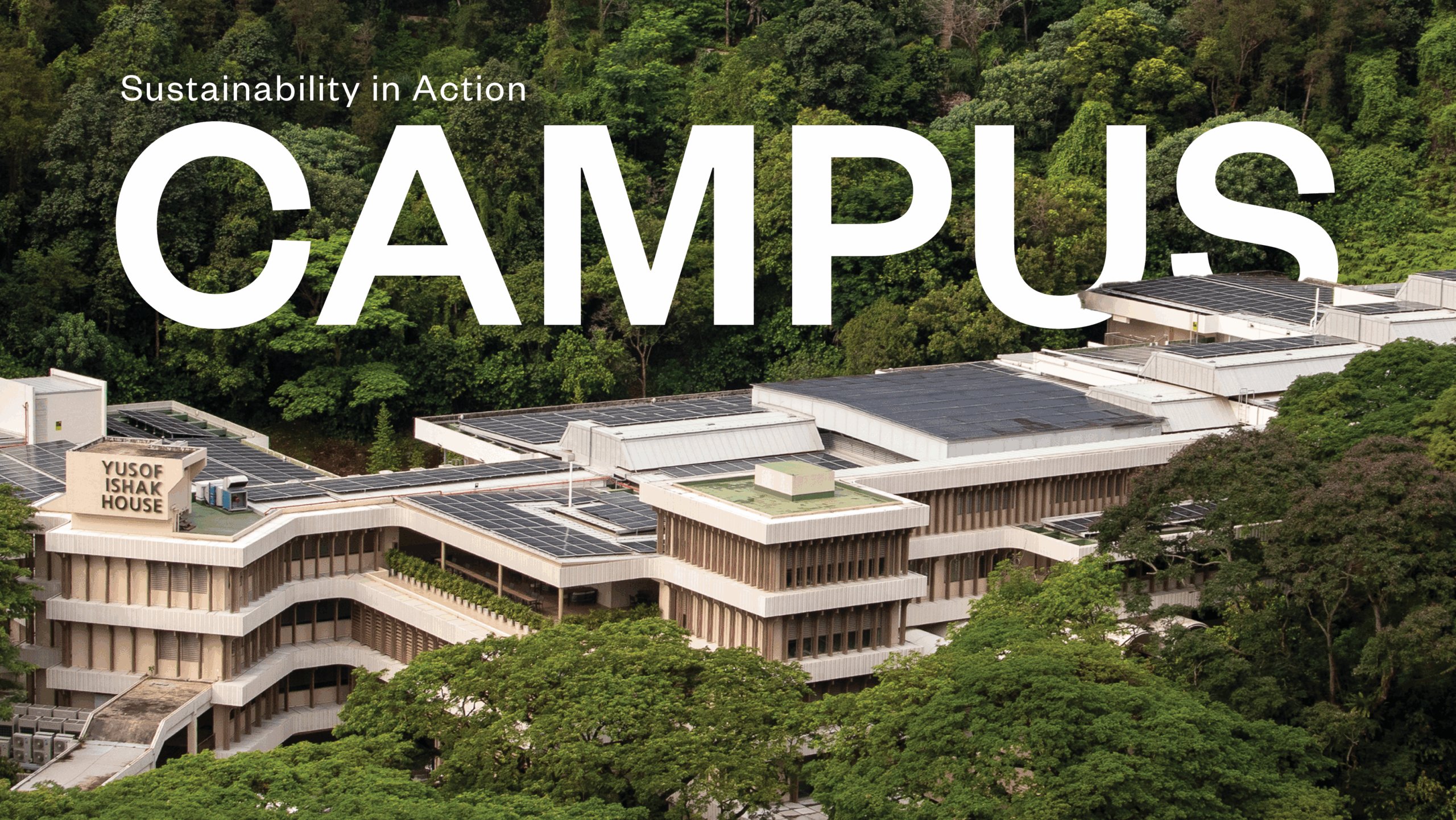
These include managing energy budgets alongside user acceptance of hybrid cooling in Yusof Ishak House, co-developing energy reduction plans with faculties, and driving takeaway disposables reduction through reuse campaigns in campus food courts and canteens. From its inception in August 2025 to March 2026, the reuse initiative achieved a 73 per cent adoption rate, signaling that reuse norms are taking root.
NUS is also deepening engagement with hostelites to inculcate waste sorting norms. Data from newly deployed Resource Sorting Stations will support efforts to improve the campus recycling rate, which currently stands at 21 per cent.
Further information on the university’s Campus Sustainability 2030 framework and environmental performance can be found in its Environmental Disclosures.
Targets and Performance
Decarbonise
FY2030 Targets
in Scope 1 and Scope 2 emissions from FY2019 baseline (113 ktCO2e)
in Energy Use Intensity (EUI) from FY2019 baseline (195 kWh/m2)

FY2025 Performance
ktCO2e
Emissions in FY2025
(vs 118 ktCO2e in FY2024)
kWh/m2
Energy Use Intensity (EUI)
(vs 193 kWh/m2 in FY2024)
While emissions increased marginally amid 1% growth in GFA, it is anticipated to plateau at baseline levels by FY2027 with the ongoing
3-year Decarbonisation Plan.
While emissions increased marginally amid 1% growth in GFA, it is anticipated to plateau at baseline levels by FY2027 with the ongoing 3-year Decarbonisation Plan.

Completed a low-carbon construction materials study, leading to new embodied carbon targets being set for new and renovated buildings.
Achievements to Date
ktCO2e
in emissions reductions through projects implemented from FY2021 – FY2024
ktCO2e
(of 11 ktCO2e targetted) in emissions reductions underway through projects as part of the 3-year Decarbonisation Plan from FY2025 – FY2027
of campus solar PV capacity commissioned*
ktCO2e
(of 11 ktCO2e targetted) in emissions reductions underway through projects as part of the 3-year Decarbonisation Plan from FY2025 – FY2027
Defend Against Climate Change
FY2030 Targets
Develop a long-term mitigation plan to
address outdoor thermal comfort using insights from the CoolNUS-BEAM initiative

trees to be planted by FY2030
FY2025 Performance

The refreshed Kent Ridge Masterplan
incorporates climate-responsive planning
(e.g., Kent Green), using data from the
campus micro-climate sensor network.
trees planted in FY2025
Achievements to Date
trees planted since 2018, including reforestation of Lower Kent Ridge Road
campus tree canopy coverage
Dematerialise
FY2030 Targets
recycling rate achieved through waste sorting and reusing norms
in daily waste disposed per capita from FY2021 baseline level (0.14 kg/day/capita)
Close plastic and food waste loops
FY2025 Performance
Campus recycling rate
(vs 19% in FY2024)
0.20kg
Daily waste disposed per capita
(vs 0.22 kg in FY2024)
The increased recycling rate was driven by sustained clean stream recycling, increased food waste recycling, and a strengthening reuse norm on campus.
Achievements to Date
reuse rate at campus drink stalls through a 7-month Bring-Your-Own campaign
Data-enabled Resource Sorting Stations deployed across hostels

Closed plastic waste loop with polyethylene terephthalate (PET) recycling and established spoke-hub for food waste recycling
Wind Corridors for a Climate-Resilient Campus
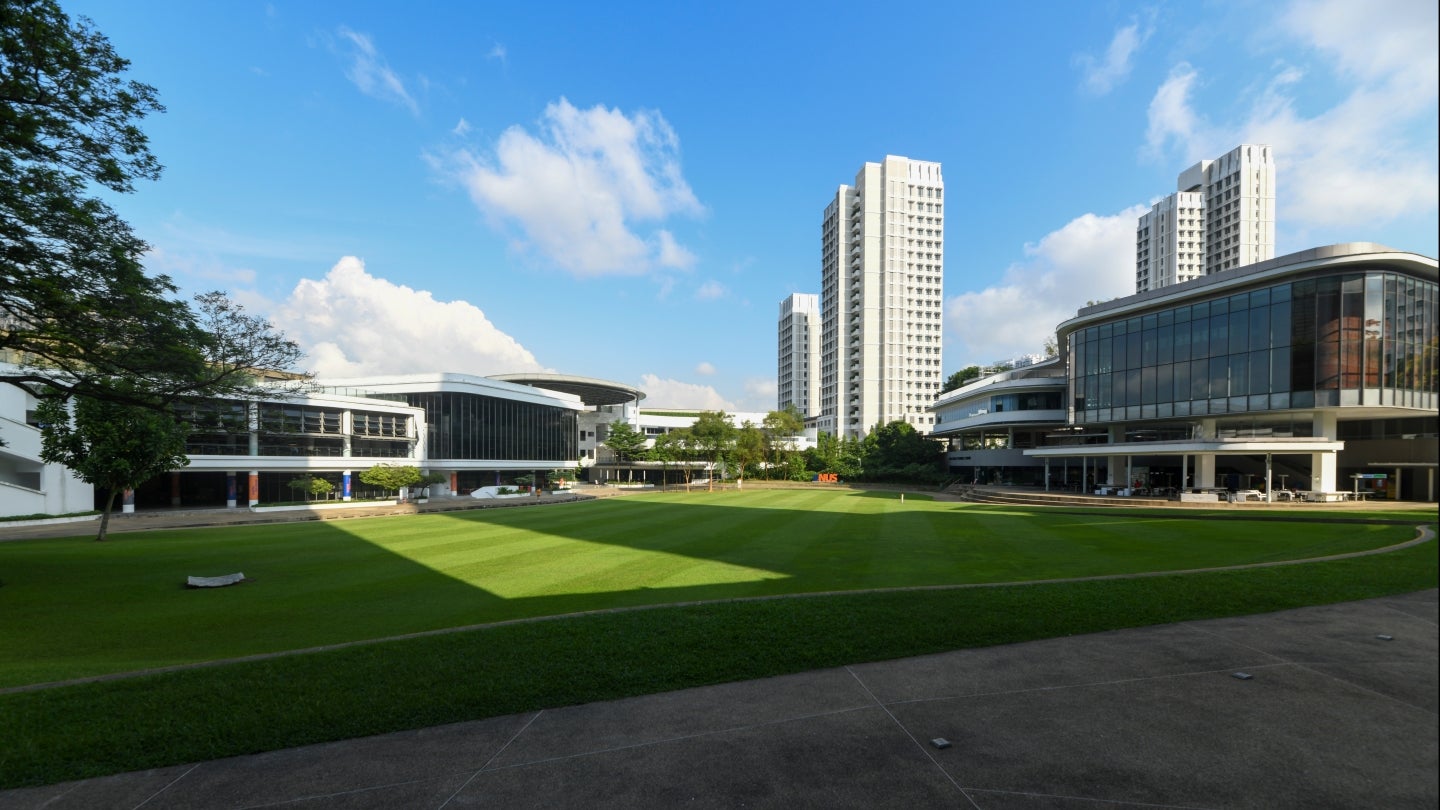
Students and staff at the Engineering precinct can look forward to a new green space beyond 2030. Called Kent Green, it is designed to improve thermal comfort. The open green and tree-lined boulevard will channel prevailing natural wind and provide shade, offering a breezy walk from the redeveloped Raffles Hall to neighbouring amenities and buildings.
Kent Green is part of the UCI’s strategy on climate-responsive design. This includes drawing in sea breezes and leveraging the monsoon seasons to establish wind corridors — unblocked paths that allow air to flow through. The approach was applied previously on campus at UTown Green and Frontier’s Academic Green, where green lungs were created based on local terrain and microclimate conditions.
In response to changing climate realities, Singapore has designated 2026 the Year of Climate Adaptation. Harnessing winds is one such adaptation effort by NUS, which is also planning for more naturally ventilated spaces in buildings that will minimise the need for cooling systems, and save energy and costs.
The strategy is grounded in data. For Kent Green, weather stations that form part of the university’s micro-climate sensor network capture prevailing wind patterns in the Engineering precinct. Project consultants will tap this data for more accurate wind simulations instead of relying on general assumptions to optimise the design of wind corridors.
Singapore has been warming at a rate of 0.24 deg C per decade over the last 40 years. On campus, the average daytime temperature rose by 0.42 deg C between 2020 and 2025. By harnessing winds, NUS aims to build a climate- resilient campus as global warming speeds up.
Delivering Smart and Sustainable Ventilation for Laboratories
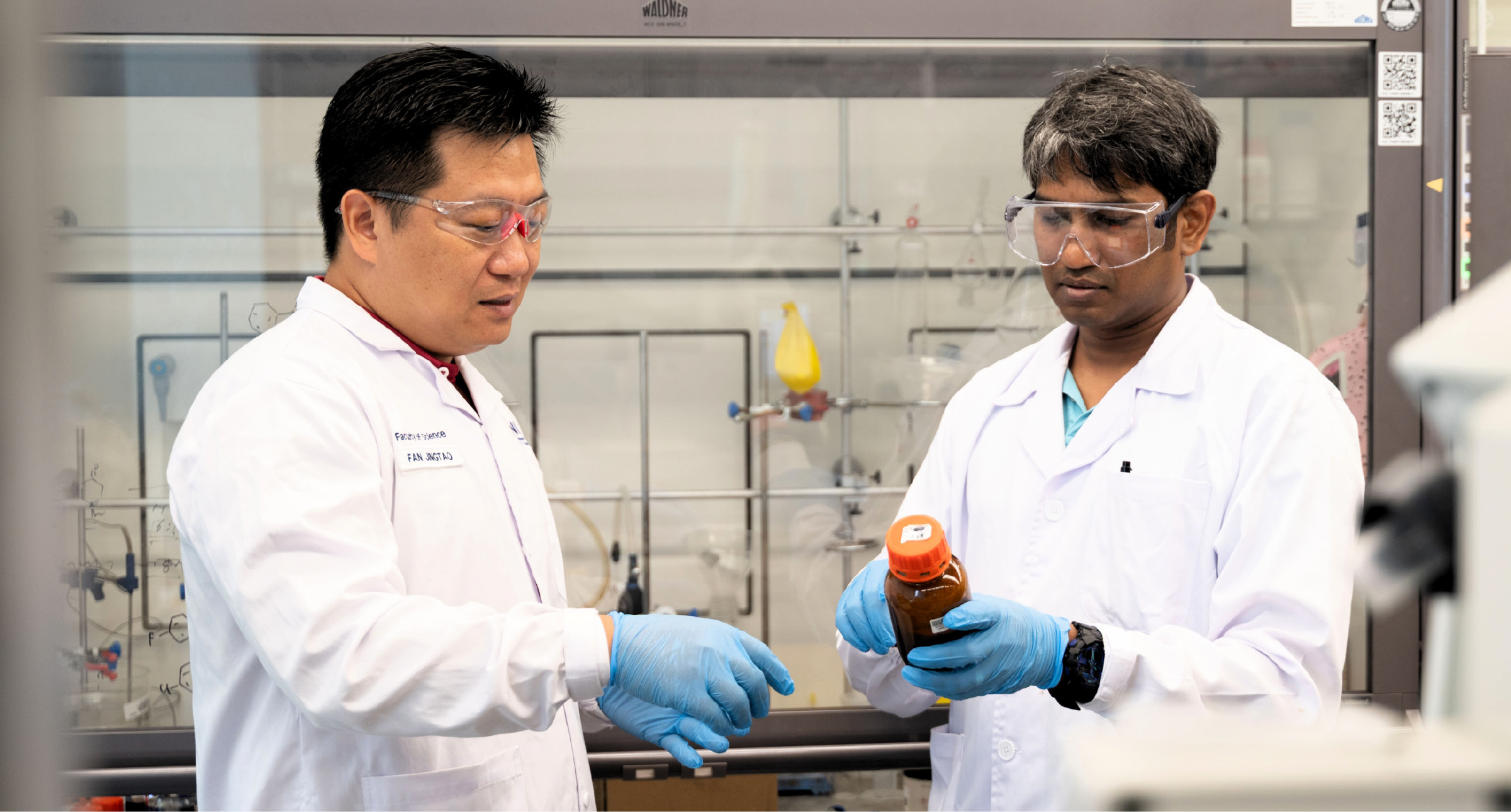
In 2028, researchers at MD6 of the NUS Yong Loo Lin School of Medicine will work in Singapore’s first laboratory with a dynamic ventilation control system. Instead of operating on a fixed schedule regardless of conditions in the room, airflow rates will automatically be reduced when the air quality is at safe levels or when the room is unoccupied.
It will also ramp up when needed, especially when concentrations of airborne chemicals and pollutants rise. This safeguards researchers’ safety, well-being, and productivity, while reaping around 15 per cent in energy savings for the building.
To achieve this, UCI completed an energy modelling study in 2025 to determine the optimal base ventilation levels for laboratories. This will be applied in a trial to a laboratory at MD6. To allow the system to dynamically control ventilation levels, NUS will be installing a variety of sensors. These will monitor occupancy, air quality, and volatile organic compounds to deliver ventilation in real time, based on how much is needed and when.
When fully implemented across MD6 between 2028 and 2029, this dynamic optimisation will enable MD6 to exceed its 20 per cent energy reduction target — it has achieved 12 per cent of energy reduction to-date. This technology will save 4.5 gigawatt-hour (GWh) of electricity yearly, equivalent to powering 1,060 four-room HDB flats for a year. This is also four times the energy savings that was previously achieved through manual optimisation of fixed ventilation levels. If successful, this dynamic ventilation system will be applied to new laboratory buildings in NUS in the push for best-in-class energy efficiency.
Similar dynamic ventilation systems are already in use at other settings on campus, such as lecture theatres and seminar rooms, following a successful pilot in 2025.
Energy-efficient indoor ventilation systems are key for decarbonisation, as they are usually one of the largest energy guzzlers in research intensive buildings — some can account for 50 per cent to 70 per cent of energy use.
But as such systems gain traction, users will need to adapt to indoor environments with dynamic cooling. For example, a space may take a few minutes to cool to a comfortable level when the occupancy sensor is triggered. Accepting this is an important shift towards the long-term success of operating sustainable buildings.
Embedding Sustainable Practices into Campus Life
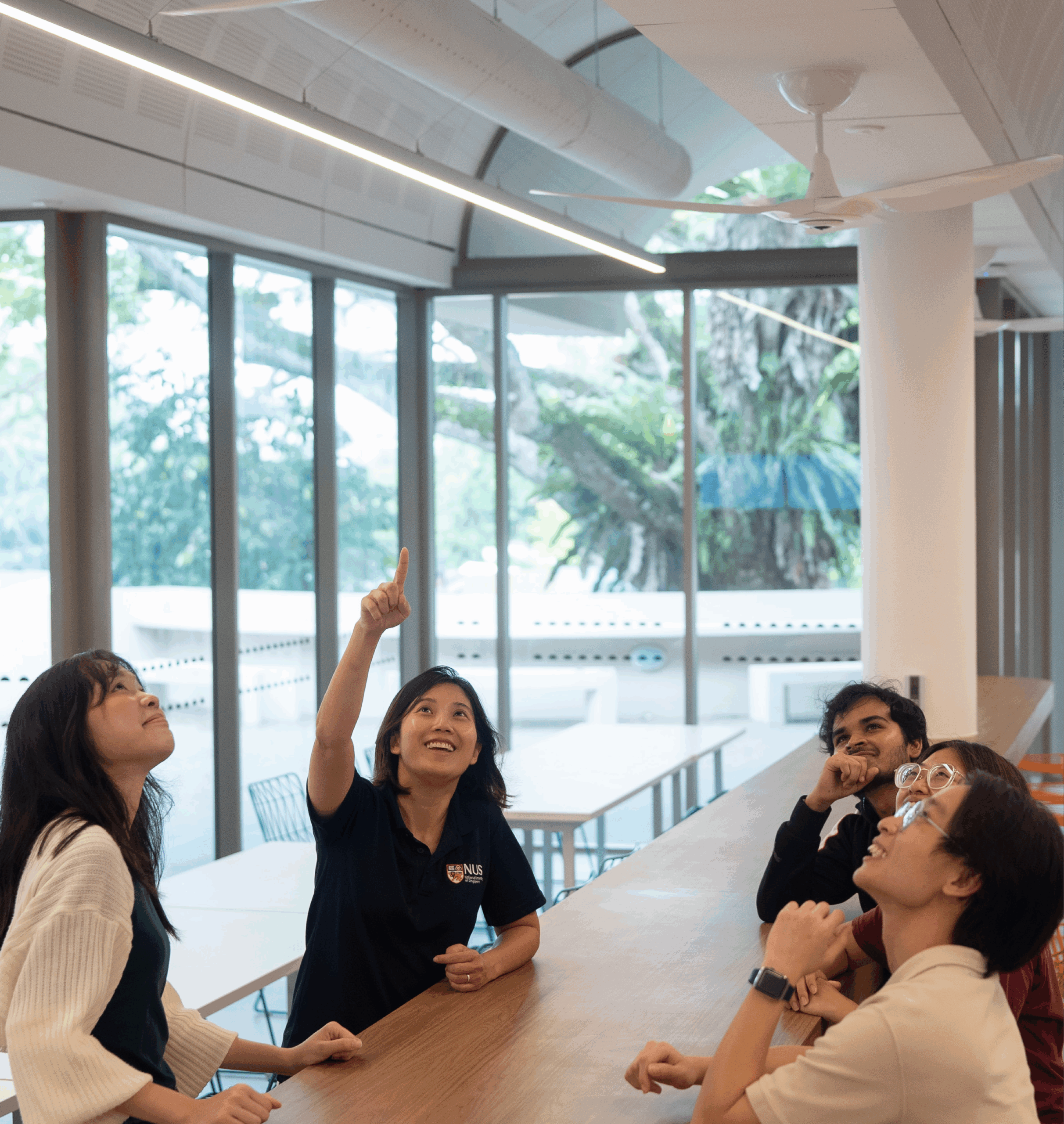
Across campus, NUS is advancing building designs and operational systems that reduce energy and material use while maintaining functional spaces. At Yusof Ishak House (YIH), a hybrid cooling system is combined with naturally ventilated common areas and surrounding greenery to enhance thermal comfort, while reducing reliance on full air-conditioning.
These design features are paired with behavioural nudges and community engagement to bring sustainable practices into campus life. An accessible reuse scheme at the canteens, for instance, makes it easier for students and staff to choose reusable options. Together, they demonstrate how infrastructure and human behaviour must work in tandem – embedding sustainability into campus life and fostering a campus culture where low-impact choices become the norm.
Prior to its revamp in 2022, YIH’s annual electricity consumption was approximately 2.2 gigawatt-hour (GWh). In FY2025, YIH recorded an energy consumption of 1.3 GWh – a 41 per cent reduction from before the building’s adaptive retrofit. This is equivalent to the annual energy consumption of 209 four-room HDB flats.
These energy savings have been achieved while balancing occupant comfort. A thermal comfort survey conducted found that 73 per cent of building occupants were satisfied with the thermal environment at the YIH canteen.
In parallel, a scheme to encourage the adoption of reusables has supported more resource-conscious practices. The YIH canteen’s support of the Bring-Your-Own campaign – through a 30-cent discount for reusable drinkware and a 20-cent charge for disposable cups – has led to a reuse rate of 54 per cent, approaching the campus average of 73 per cent.
Looking ahead, these principles will guide both new developments and the adaptive retrofit of existing buildings on campus, with future projects designed to deliver energy efficiency while actively shaping user behaviour. In the coming year, NUS will launch a programme aimed at hostelites to encourage resource conservation behaviours.