Scaling Ideas into Impact
For aspiring entrepreneurs, the journey from cutting-edge research to scalable deep tech solutions is demanding. Ideas must be tested early, refined with industry, and built around clear paths to adoption.
NUS Enterprise, the entrepreneurial heart of the University, supports this journey through an innovation flywheel — where talent, research, capital, and entrepreneurship continually reinforce one another. Since 2001, NUS Enterprise has nurtured 10 unicorns, over 3,000 start-ups, and 5,500 students, enriching innovation and start-up ecosystems globally.
The journey begins with talent. Through the NUS Overseas Colleges programme, which spans more than 15 innovation hubs, undergraduates spend up to a year interning with technology start-ups and learning how companies are built in competitive markets. At the graduate level, the NUS Master of Science in Venture Creation builds on this foundation by sharpening commercial thinking and venture-building discipline.
Beyond nurturing student founders, NUS Enterprise empowers Singapore innovators to transform lab discoveries into impactful ventures. In 2025, the NUS Graduate Research Innovation Programme (GRIP) transitioned into National GRIP, a unified national platform supported by S$50 million over five years from the National Research Foundation, NUS, and Nanyang Technological University.
As ventures take shape, they need the right ecosystem to grow. BLOCK71, NUS Enterprise’s global network of physical accelerators across 11 cities, connects start-ups to markets, mentors, partners, and regional opportunities. Its Technology Transfer and Innovation unit also helps translate NUS research into real-world impact through technology transfer, industry partnerships, and commercialisation support.
The four start-ups featured in this section, Ecovolt, Terraco Earth, Fitobite, and Hydgen, are success stories of this innovation flywheel in action. As they scale, they attract stronger talent, build industry confidence, draw more sophisticated capital, and reinforce NUS’ role as a hub for research translation and venture building.
Highlights in Numbers
Innovation and Enterprise (As at Mar 2026)
Curbing Vampire Energy Waste
Featuring: Ecovolt
Currently housed in NUS start-up incubators BLOCK71 at THE HANGAR and BLOCK71 Social Impact Hub, Ecovolt’s system is today part of sustainability solutions adopted in at least 27 buildings, with the latest being City Developments Limited’s office at Republic Plaza.
The startup is currently in talks with NUS about potential upcoming collaborations where its solutions will not only help to track the energy consumption in a medical laboratory, but also monitor and control humidity and lighting in the university’s new agricultural laboratory.
Ecovolt is able to deliver 8 to 20 per cent energy savings without having to completely rewire buildings. It has reduced 100 tonnes of carbon dioxide since July 2025, and is targeting to cut 1,000 tonnes in 2026. This is equivalent to removing more than 200 passenger vehicles from the road for a year.
“Our mission is to help every building in Singapore to reduce greenhouse gas emissions, operate more efficiently, and hit the sustainability mandate of the Singapore Green Plan.”
Mr Raphael Chew
CEO and co-founder of Ecovolt
Leaving devices plugged in even when they are not in use is a common habit. But few realise that this makes up around 16 per cent of electricity consumption in many homes and offices — resulting in so-called vampire energy waste.
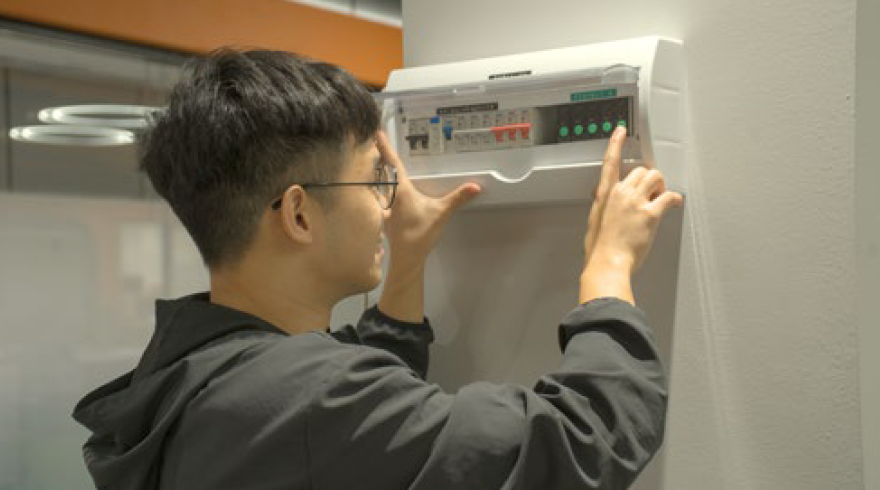
Sustainability startup Ecovolt aims to change this unthinking practice. Through its custom-designed smart plugs, miniature circuit breakers and building management system integrations, Ecovolt enables its clients to monitor and manage their electricity use via an artificial intelligence-enabled platform.
The system also recommends schedules to reduce wastage, and allows users to remotely or autonomously power down devices, turn off plugs, and manage physical facilities like lighting and air-conditioning systems. These can be adjusted based on occupancy.
“Our goal is to help every building in Singapore go smart, digitalise, and get data that was previously inaccessible, so building operations teams can monitor and manage these buildings,” said Ecovolt Chief Executive Officer (CEO) and co-founder Mr Raphael Chew.
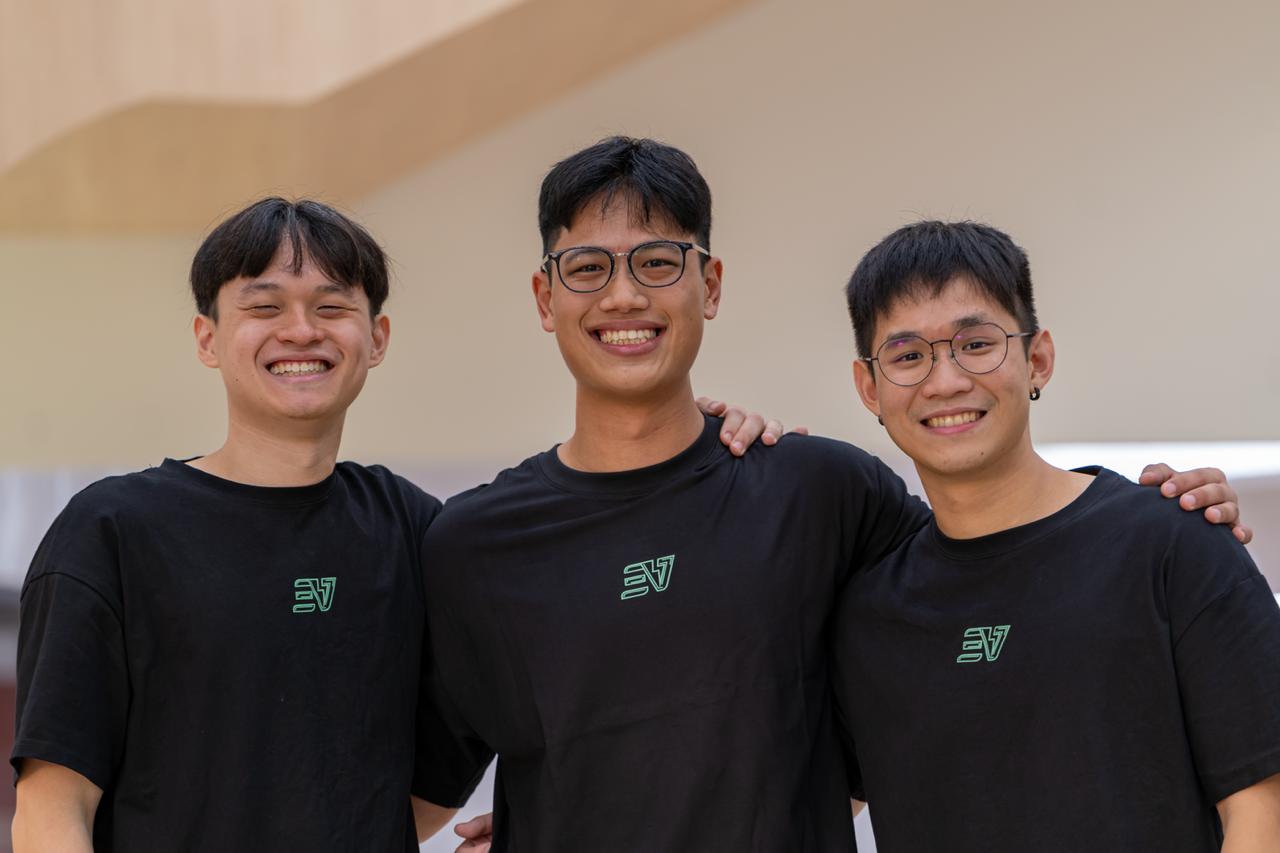
The company has come a long way since it won the Sustainable Development Goals Open Hack @ NUS 2024 with its proposal to address vampire energy waste. As young university students, the three founders were met with scepticism when Ecovolt was first launched in 2025. They had to field questions such as whether their solution was viable or if it would affect critical infrastructure. But the three NUS Overseas College alumni quickly put those doubts to rest — the young entrepreneurs knew what their product was capable of.
Breakthrough Carbon Capture Technology
Featuring: Terraco Earth
They built a solution based on metal–organic frameworks (MOFs) developed by Professor Zhao Dan, now Terraco Earth’s technical advisor. “MOFs are solid materials that trap carbon dioxide like a sponge, physically rather than chemically,” Ms Effendi explained.
When a light vacuum is applied, the gas is released, without boiling or steam, thus significantly reducing energy consumption. Almost all of the carbon is then reused to make anything from cement to furniture. Terraco Earth estimates that its system can reduce capital costs by about 25 per cent, and operating costs by more than 50 per cent.
Terraco Earth’s solution initially faced some scepticism from large multinational corporations. But they pressed on, supported by the likes of SGInnovate and other industry partners willing to test early systems.
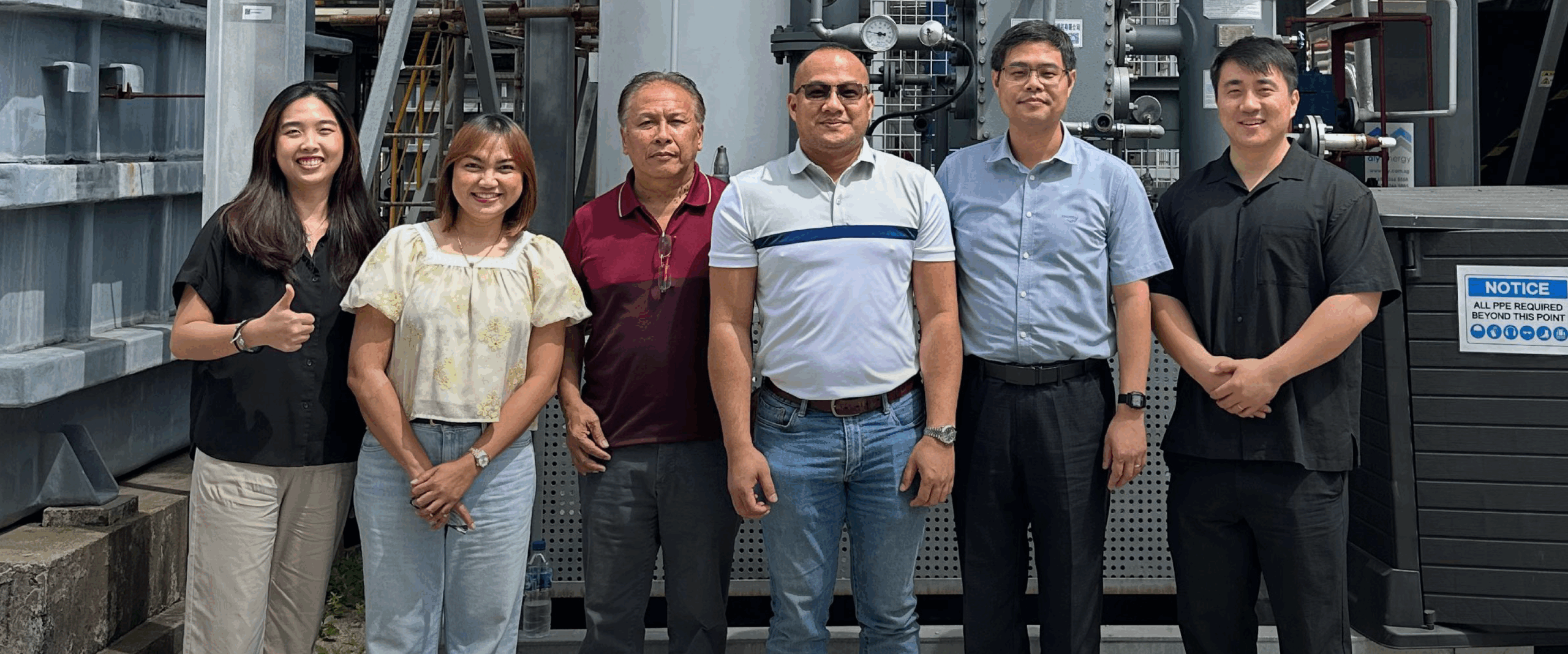
Today, the startup’s pilot project at a waste-to-energy research plant in Tuas, Singapore captures one tonne of carbon dioxide a day using real exhaust gas, making it the first MOF-based carbon capture pilot of this scale in Southeast Asia. The team aims to scale to 300 tonnes daily within five years.
If this scale is reached, Terraco Earth could finally make carbon capture viable for thousands of smaller plants that, until now, could not afford to act.
“Terraco Earth is positioned as a promising next-generation, world-leading carbon capture solution. Looking ahead, Terraco Earth aims to achieve large-scale industrial deployment and set new benchmarks for energy-efficient carbon capture technologies worldwide.”
Professor Zhao Dan
Technical Advisor of Terraco Earth
Carbon capture has long been seen as a way to clean up heavy industry. However, for many factories, it is a financial non-starter.
Conventional systems rely on liquid chemicals called amines that react with carbon dioxide. Once the gas is trapped, the liquid must be heated to very high temperatures to release it again. That step requires large boilers, steam, cooling water, and wastewater treatment. The technology works, but it is economically viable only at a massive scale.
Terraco Earth was formed to solve this problem. The company was spun out of NUS after its co-founders, Ms Sumarni Rifemi and Ms Felicia Effendi, met while on their NUS Master of Science in Venture Creation (NUS MSVC) journey.
During their final semester in 2025, they embarked on their project in a venture creation practicum, a highly experiential core course within the NUS MSVC. Told to treat their project as a real startup, the duo interviewed cement firms, oil and gas companies, and power plants — so-called “hard-to-abate” sectors — and discovered that cost was what prevented them from embracing carbon capture.
“Terraco Earth is positioned as a promising next-generation, world-leading carbon capture solution. Looking ahead, Terraco Earth aims to achieve large-scale industrial deployment and set new benchmarks for energy-efficient carbon capture technologies worldwide.”
Professor Zhao Dan
Technical Advisor of Terraco Earth
Plant-based Proteins for Strong, Healthy Ageing
Featuring: Fitobite
“This combination results in the perfect amino acid profile and provides nutrition for the 40-plus age group,” said Chief Executive Officer (CEO) and co-founder of Fitobite, Ms Christentia Steffany.
The idea for Fitobite was first developed during her time at the National University of Singapore, specifically in the NUS Master of Science in Venture Creation (MSVC). The venture creation practicum helped shape her entrepreneurial thinking, and refine the foundation of the business.
Today, the startup works with local Indonesian farms to source these legumes, supporting the agricultural community and reducing the carbon footprint caused by food transportation and packaging. Fitobite has already secured deals with distributors, and its products will also be sold on an e-commerce website. The protein powders will be launched in September 2026, while the liquid shots will be sold in 2027.
Through its products, Fitobite aims to provide sustainable, lactose-free, high- quality proteins — a growing demand driven by an ageing population. By 2050, the proportion of people aged 60 and above in Southeast Asia is expected to reach 22.9 per cent, up from 12.2 per cent in 2024.
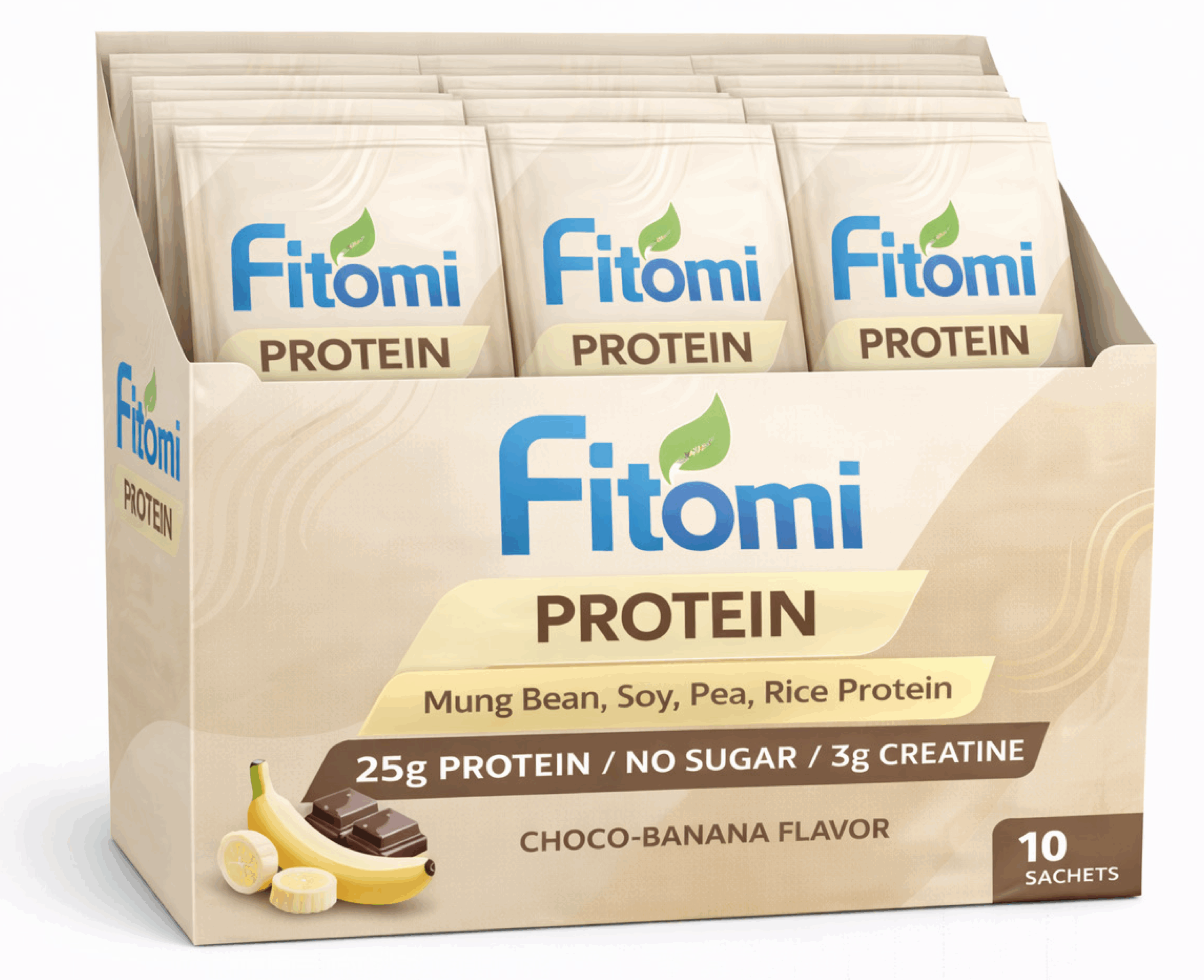
At age 40, people start to lose muscle mass, leading to a higher risk of falls and fractures. While the problem is inevitable, the rate of muscle loss can be slowed with balanced nutrition and exercise.
To support this, deep-technology food innovation startup Fitobite is creating protein supplement products like powders and ready-to-drink liquid shots using plant-based proteins.
An issue with most protein supplement products in the market is the use of whey protein. Apart from containing synthetic amino acids that could cause kidney issues, whey protein is made from dairy, which contains lactose, a sugar that becomes more difficult to digest at older ages. Dairy production also has a larger carbon footprint, a result of the land use, water consumption, and emissions from raising cattle.
Fitobite’s plant-based proteins are not just a lactose-free alternative but also a more eco-friendly option, using legumes to obtain the nine essential amino acids required in human diets. The Indonesia-based company employs an extraction method developed by NUS, deriving proteins from mung beans, rice, pea, and soy beans.
“We’d like to be a pioneer for an active ageing population, using all-natural and plant-based ingredients.”
Ms Christentia Steffany
CEO and co-founder of Fitobite
Green Hydrogen — On-site, On demand
Featuring: Hydgen
Hydrogen is the most versatile molecule on Earth, serving as a critical building block for everything from fertilisers to steel. However, while hydrogen itself is a clean fuel, the way we currently obtain it is not.
More than 95 per cent of the world’s supply is grey hydrogen, produced from fossil fuels. This process generates a billion tonnes of carbon dioxide emissions each year, equivalent to around 2 per cent of global emissions.
Even when companies try to switch to green hydrogen — made by splitting water with renewable electricity — they hit a wall of logistics.
Conventional green hydrogen is usually made in massive, centralised plants that must operate continuously. To get that gas to a factory, it must be compressed or liquefied and trucked across long distances. Furthermore, most current green technologies rely on rare and expensive metals like iridium.
Enter local startup Hydgen, whose decentralised system produces ultra-pure hydrogen exactly where it is needed. “By producing hydrogen on-site, we also remove an entire layer of expense in terms of transport and storage,” explained Dr Michael Gryseels, Executive Chairman and co-founder of Hydgen.
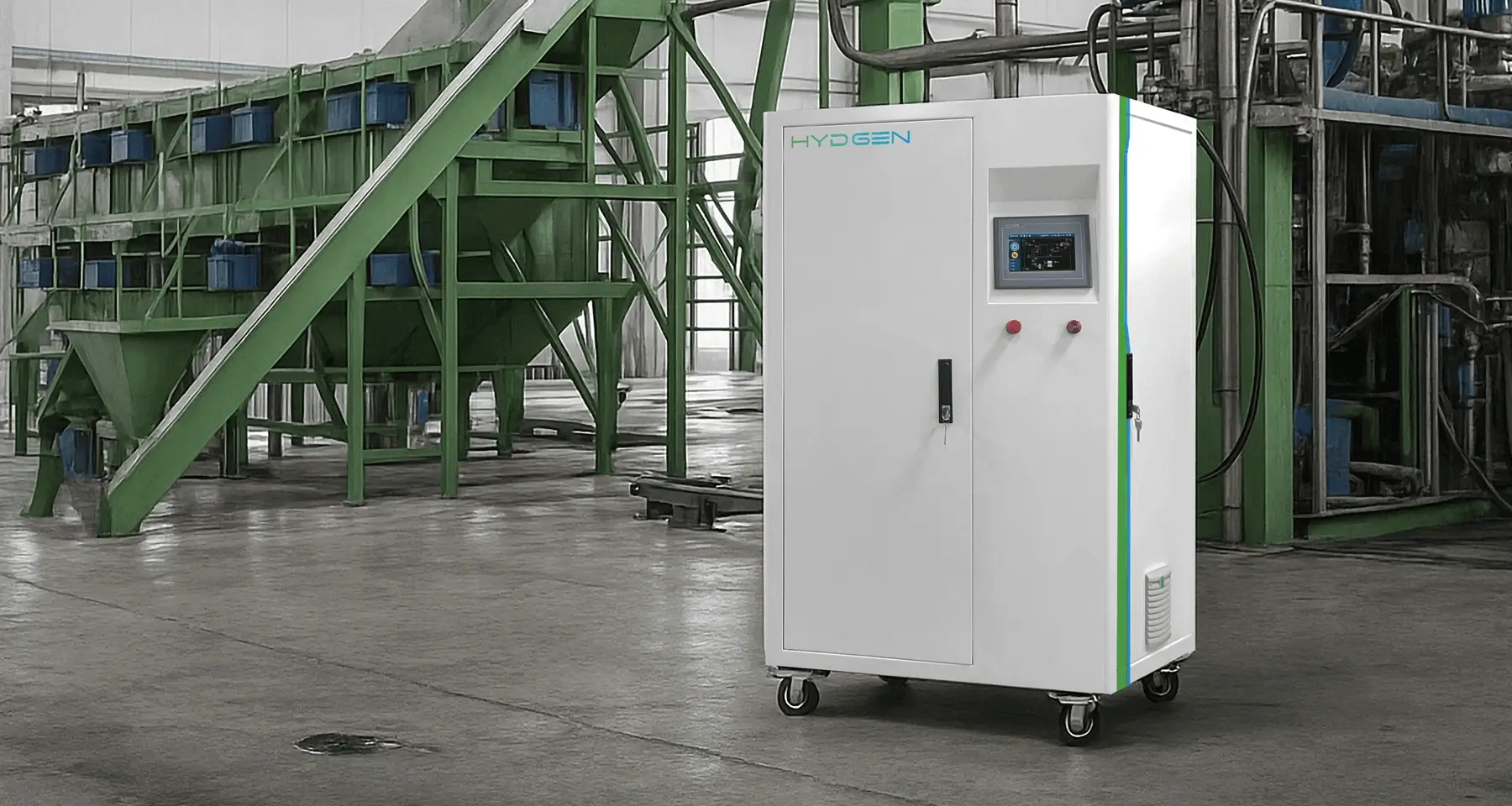
Its breakthrough Anion Exchange Membrane technology uses a specialised “filter” and proprietary catalysts made from abundant, low-cost materials to split water into hydrogen and oxygen. This allows Hydgen’s machines to be more durable and significantly cheaper to build than traditional models. These systems are actively operating at various industrial customer sites today.
The innovation was born from research at NUS by Hydgen’s two other co-founders, Dr Goutam Dalapati and Dr Krishna Kumar. Supported by a National Research Foundation grant, their work stretched from 2019 to 2023. In 2024, with an initial investment from Dr Gryseels, as well as funding and mentorship from the NUS Graduate Research Innovation Programme, the team finally turned their lab experiment into a commercial product.
To date, Hydgen has raised more than US$8 million, with clients from sectors that range from oil and gas, to automobile. It is on track to build a 250 kilowatt system by late 2026, and hopes to eliminate 750,000 tonnes of carbon dioxide annually by 2031.
With its game-changing innovations, Hydgen is proving that the path to a zero-carbon future is finally within economic reach. Sustainability aside, they are also enabling companies to achieve energy security and industrial reliability.
“We have the technology which we believe can actually be one of the key components for decarbonising heavy industry.”