Leading Change in Sustainability
Across its community, NUS is advancing sustainability through leadership — shaping mindsets, influencing systems, and inspiring action.
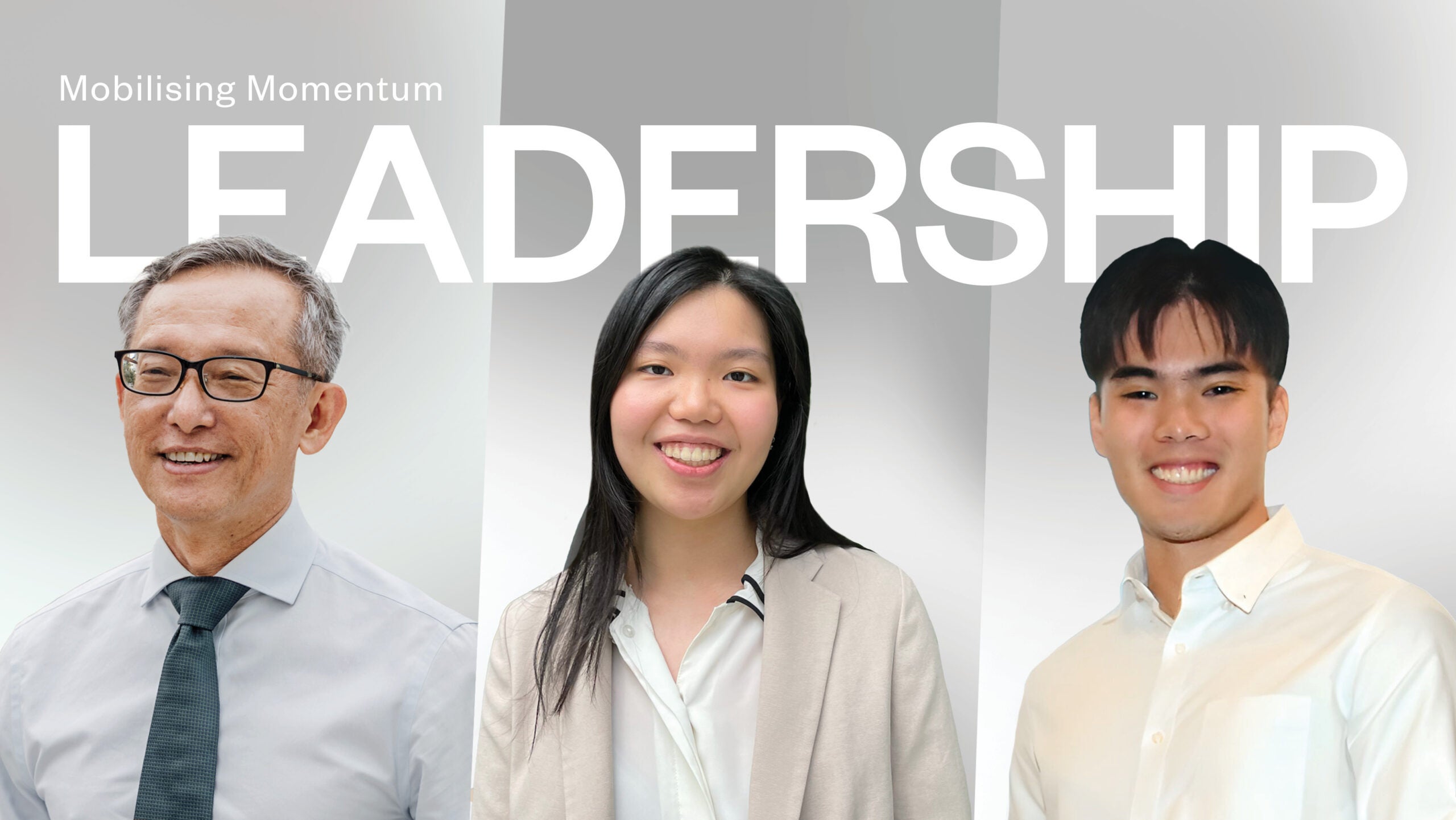
At the forefront are individuals like Associate Professor Simon Tay, whose work bridges academia and policy, demonstrating how thought leadership can translate into real-world impact, from regional environmental cooperation to classroom learning.
This spirit extends to students Nadya Heryanto and Ivan Neo, young changemakers recognised for their leadership in driving sustainability initiatives and engaging the wider community, and a growing ecosystem of environmental student groups tackling climate challenges from multiple angles, from data-driven analysis to hands-on conservation and sustainable finance.
The university’s flagship environmental festival, NUS Sustainability CONNECT, also ran its third edition, organising close to 40 events over four weeks — including panels, symposiums, and tours. Most of the events were oversubscribed, and involved 32 partners including new participants such as NUS Libraries, NUS College, the SingHealth Duke-NUS Global Health Institute, and the Lee Kong Chian Natural History Museum.
Beyond campus, NUS is shaping national and global agendas. Its role in Singapore’s first comprehensive healthcare emissions assessment shows how academic expertise can inform policy and enable system-wide transformation, while offering a model for other countries.
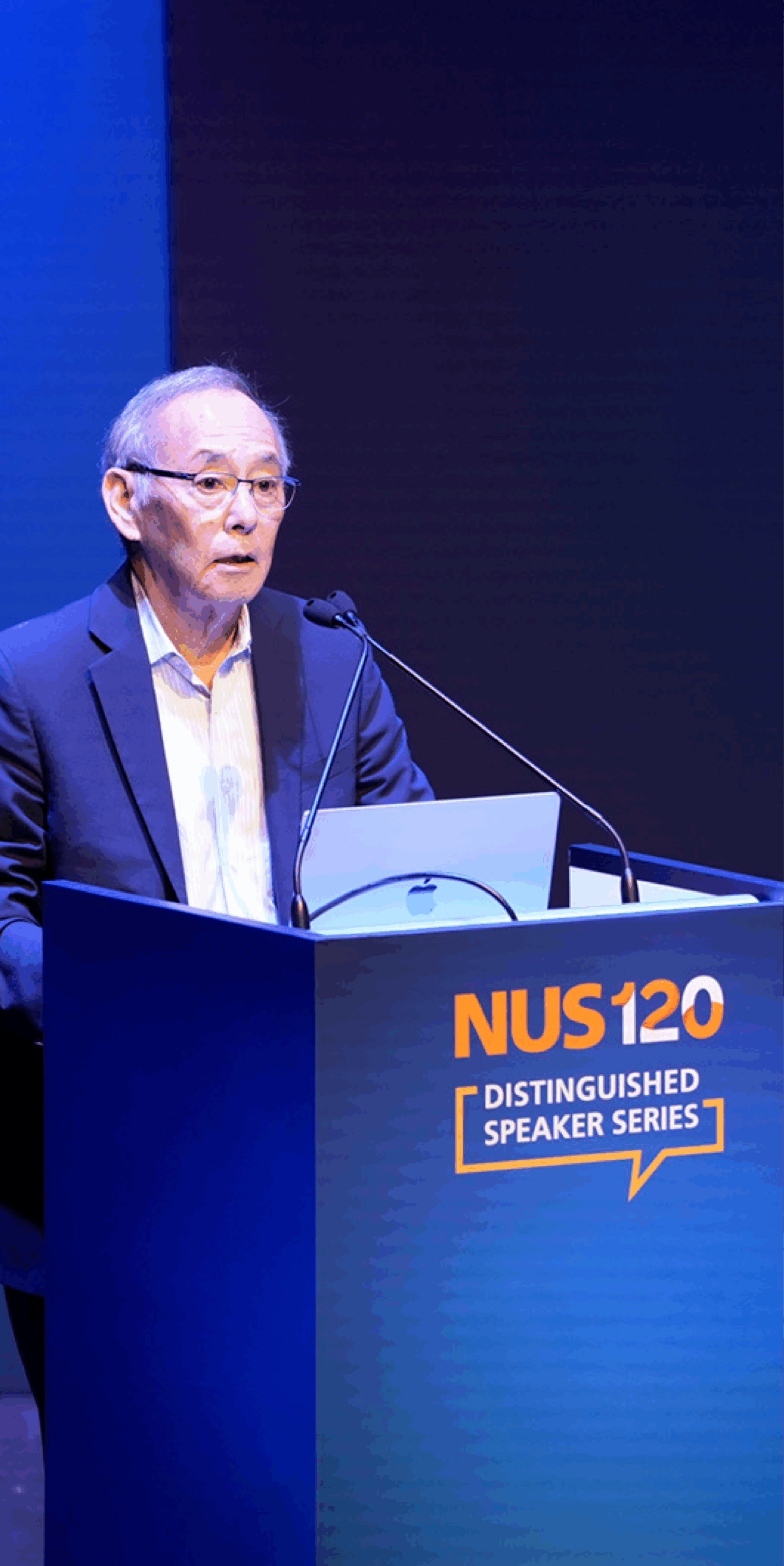
The university also convenes global thought leaders through platforms like its Distinguished Speaker series, bringing leading experts to challenge and inspire its community, and reinforcing its role as a hub for climate dialogue and action.
Together, these stories reflect how NUS is cultivating leadership that will shape a more sustainable future.
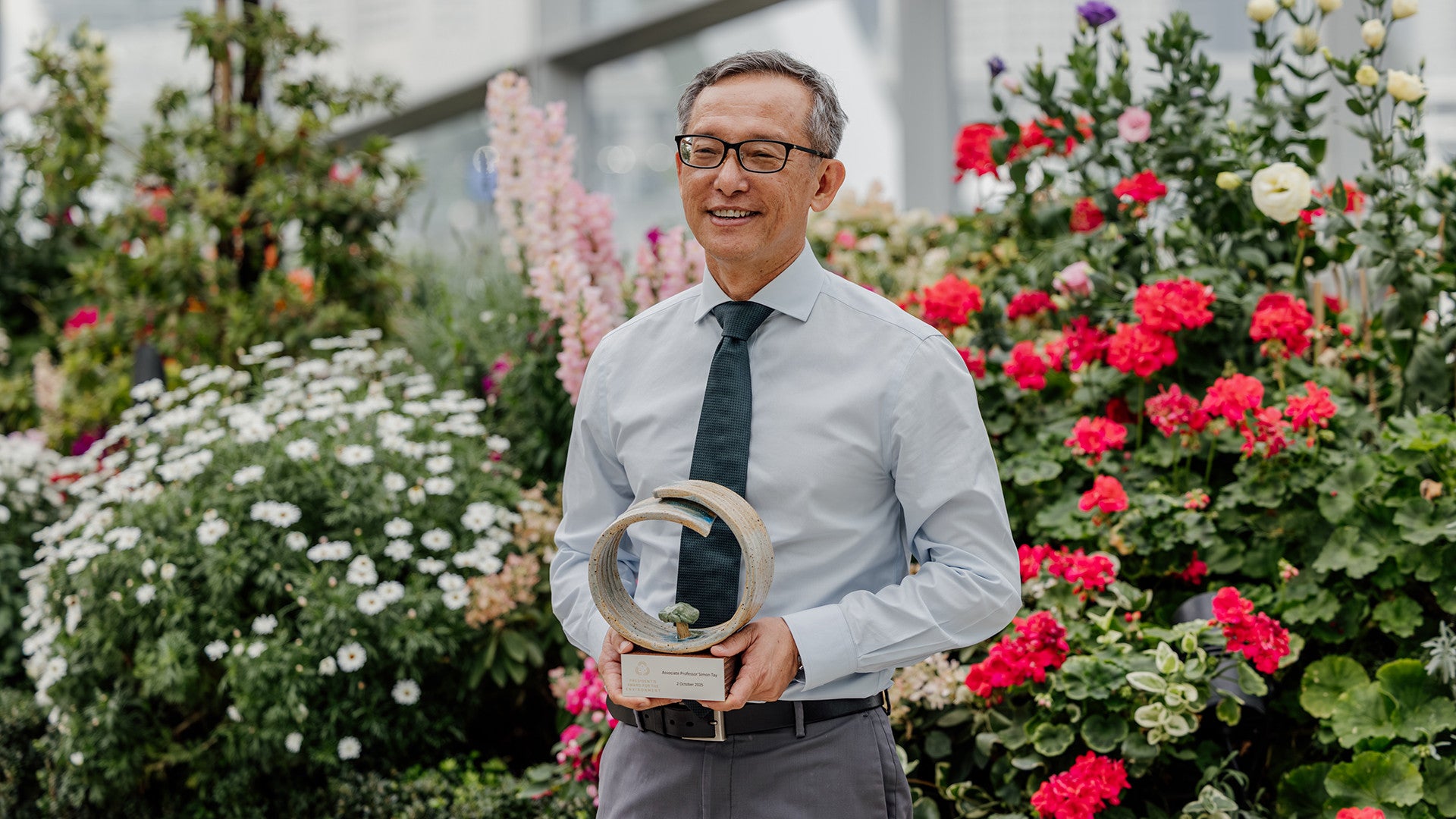
Assoc Prof Simon Tay: Champion for the Environment
“I believe in the importance of praxis linking practice and theory, academic knowledge to how things are and could be. The practicality of trying to address the haze and other issues also broadens my understanding of how law interacts with politics, economic policy, markets and society. I hope I have brought those experiences and perspectives into the classroom for my students and gone beyond textbook answers.”
Associate Professor Simon Tay
NUS Faculty of Law
When haze shrouded Singapore in the 1990s, Associate Law Professor Simon Tay knew something had to be done. It was a problem that had emerged in the 1970s and was progressively worsening.
In 1998, he made his first bold step, mooting the first parliamentary motion on transboundary haze as a Nominated Member of Parliament. That same year, he also chaired the inaugural regional dialogue on the cross-border crisis with Indonesian and Malaysian experts.
Since then, he has become a leading haze expert. As Chairman of the National Environment Agency from 2002 to 2008 and current Chairman of the Singapore Institute of International Affairs (SIIA), he played an instrumental role in addressing transboundary haze pollution and building regional collaborations that have created significant impact both locally and in the region.
He has written extensively on the problem in academic publications and even travelled with colleagues at SIIA and NUS to Riau province, one of the most fire prone areas in Indonesia, to see how communities and companies cope with the fire issue first-hand.
For his contributions to the country, he was awarded the prestigious President’s Award for the Environment (PAE) on 2 October 2025, the highest environmental accolade in Singapore.
The PAE is organised by the Ministry of Sustainability and the Environment, and is conferred biennially upon individuals, organisations, and education institutions to honour the sustained contributions by environmental champions.
Assoc Prof Tay graduated from the Faculty of Law in 1986, before joining it in 1995. His contributions to the school include pioneering the course on International Environmental Law, which he continues to teach today. He also regularly appears on news platforms such as Bloomberg and BBC, and publishes commentaries in leading newspapers and academic journals.
Eco-warriors Win Awards for Spreading Green Message
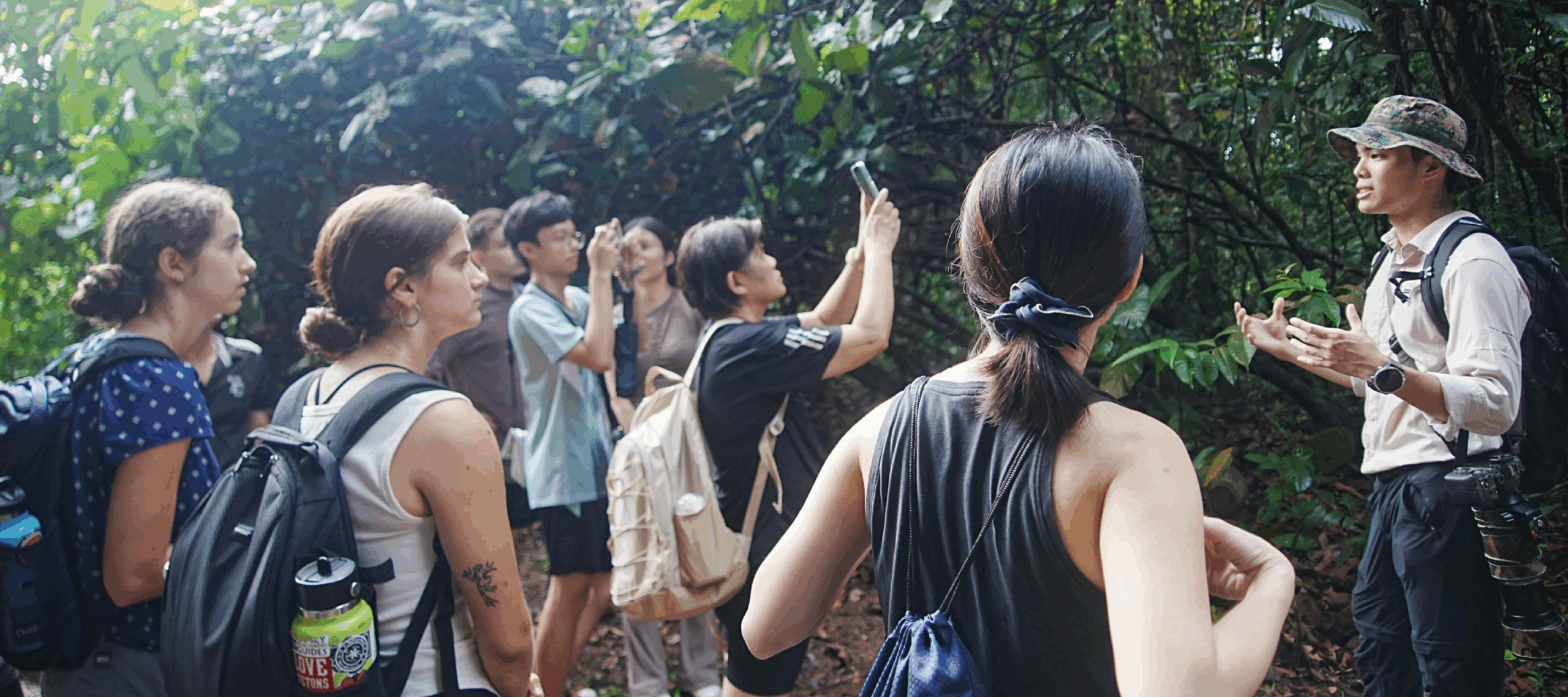
Saving the environment sometimes involves getting your hands dirty. Just ask conservation researcher Ivan Neo, an environmental studies graduate from NUS.
The 25-year-old runs public engagement initiatives like nature walks through social enterprises and student groups, where he explores green spaces to highlight less charismatic species and native habitats for participants, often capturing them on camera. He then showcases these rare sightings on his Instagram account, @neo.wildlife, and publishes species records in scientific journals to raise awareness of lesser-known species in Singapore.
Meanwhile, final-year accounting student Nadya Heryanto works to spread the green message on campus. She led both NUS SAVE (Students’ Association for Visions of the Earth), a campus- wide environmental group, and Green CAPTains, which promotes sustainable practices at the College of Alice & Peter Tan (CAPT), her residential college.
For their efforts, the two eco-warriors were recognised at the 2026 HSBC NYAA Youth Environmental Awards. The initiative, supported by the National Youth Achievement Award (NYAA) Council, returned after an eight-year hiatus, and celebrates the contributions of youth leaders to environmental conservation.
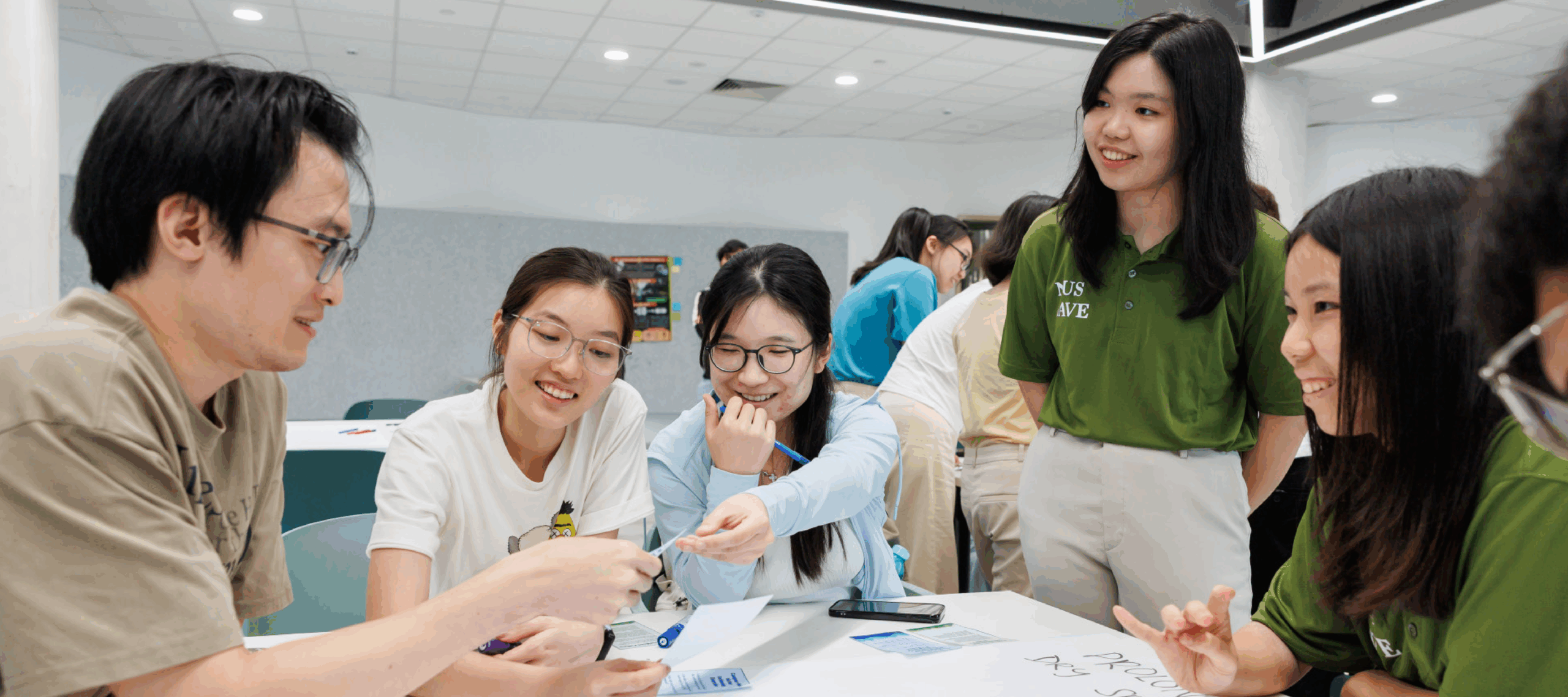
Nadya, who won the HSBC NYAA Youth Environmental Award, has spearheaded campus initiatives, including reviving the NUS SAVE Sustainability Fund, which had been dormant for the past few years, and developing a new standard operating procedure for overall fund governance and disbursement, thereby enabling support for ground-up green initiatives around NUS.
She also set up bins with vermicompost — a nutrient-rich organic fertiliser produced by earthworms — to manage food waste at CAPT. The 22-year-old also holds globally recognised credentials in environmental, social, and governance analysis and investing, which she believes will be transferable in any sector, even beyond sustainability.
Environmental preservation is more than just muddy work — to her, environmental awareness extends beyond a niche field and becomes embedded in everything, from daily life to broader industries like finance and engineering.
“Sustainability is like a side dish,” she said. “I want people to understand that it shouldn’t be a thing on its own. It’s connected to everything we do.”
This was also what motivated Ivan, who received the Merit Prize, to co-found Re:Kindle in 2024. The social enterprise focused on delivering nature experiences to less privileged groups, organising nature walks and outdoor experiences that blend ecological education with mental wellness. By making nature walks and experiences more accessible and affordable, Ivan aims to inspire a deeper appreciation of nature in Singaporeans.
Student Environmental Groups Grow in Strength
“At NUSSFC, we believe that the future of finance should achieve triple bottom line results: financial return, social impact, and environmental impact,” said Karen Lie, co-president of NUSSFC.
The group aims to channel investments towards sustainable and impactful ventures through official registration soon.
When it comes to sustainability, student-led ingenuity plays an important role at NUS in advancing the movement.
From ploughing through environmental data to cleaning up the seas, three new environmental student groups emerged this year, each tackling the climate challenge from a unique angle. There are currently over 20 such groups in NUS.
In a world of complex green claims, the NUS Climate Analytics and Technology (CAT) Club is dedicated to scrutinising the data behind everyday choices and large-scale solutions. Founded in October 2025, it organises webinars, life cycle assessment bootcamps, visits to cutting-edge facilities, and engagements with climate technology firms. Through these, the club empowers its community to separate fact from fiction and build solutions on a foundation of robust science.
“NUS CAT strongly believes that sustainability impact and strategy should be justified with science without qualitative vague claims. Our events are open to all disciplines as we aim to conduct technical sharing in layman’s terms.”
Ratana Lok
Co-founder of NUS CAT Club
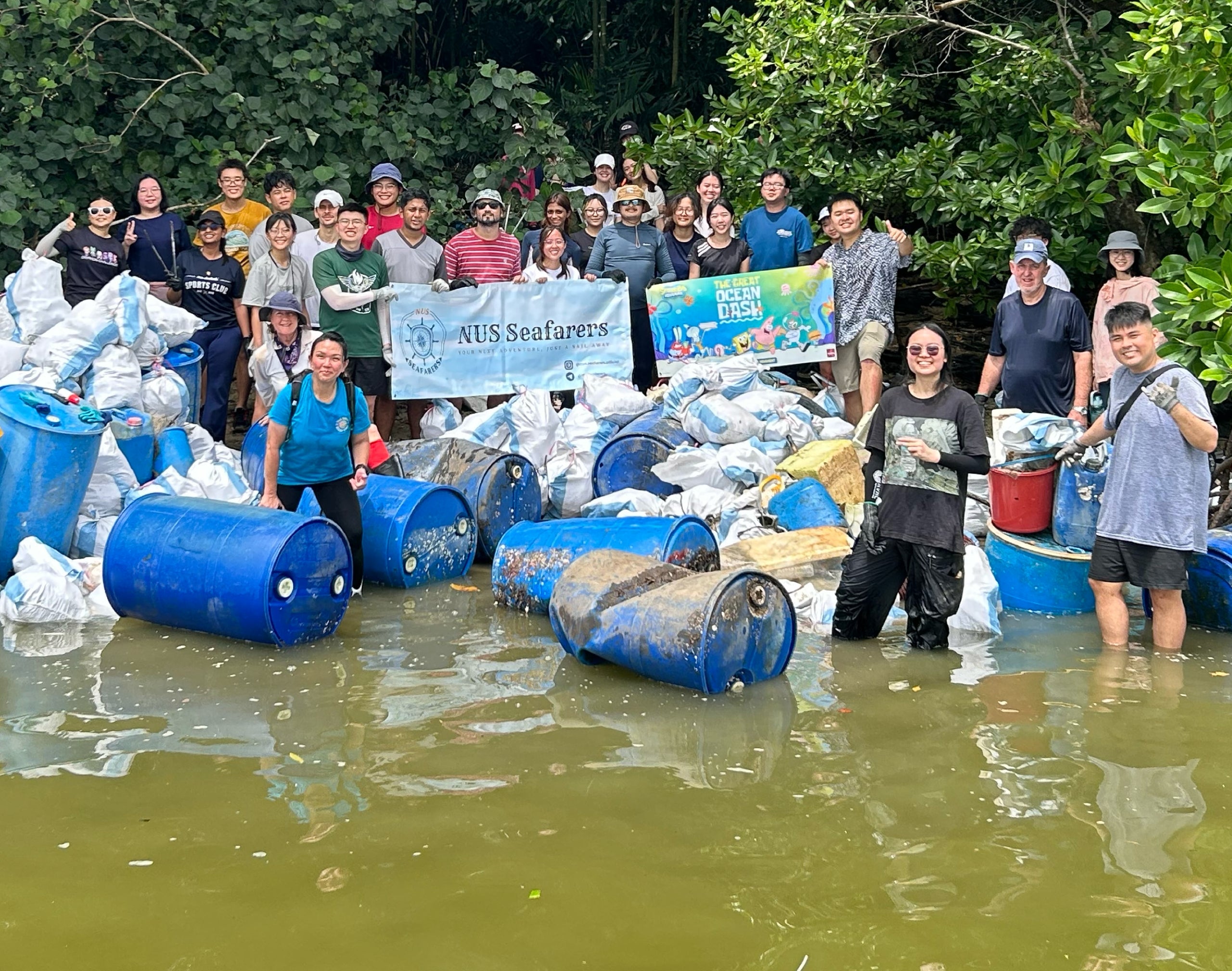
Meanwhile, NUS Seafarers takes students to the sea. Since June 2025, the club has not only been teaching students to sail, but also helping them discover the ocean’s fragility through direct experience with it. Witnessing plastic pollution and shifting weather patterns firsthand fuels their commitment to protecting the seas. In 2025, the club conducted two coastal cleanups at Ketam Island, located next to Pulau Ubin. It plans to run similar cleanups once every semester, along with workshops that cover topics like upcycling old sails.
Lastly, bridging the gap between capital and climate action is the NUS Sustainable Finance Club (NUSSFC). Founded in 2024 by students from political science and finance, the club fosters an interdisciplinary dialogue where finance meets environmental policy, focusing on research, industry engagement, and investment themes to drive impact. In 2025, it hosted an impact investing seminar with student group 1.5degreeNUS, and fireside chats with industry leaders.
NUS Helps Drive Singapore’s First National Healthcare Emissions Assessment
The Centre for Sustainable Medicine (CoSM) at NUS’ Yong Loo Lin School of Medicine played a key role in conducting Singapore’s first comprehensive healthcare emissions assessment published by Singapore’s Ministry of Health (MOH).
The NUS-MOH study marked a significant milestone for Southeast Asia. It revealed that the Republic’s healthcare system performed 18 per cent better than previously estimated, delivering world-class care at 20 per cent lower carbon intensity, compared to other advanced economies.
The assessment puts Singapore’s healthcare carbon footprint at 4.1 million tonnes of carbon dioxide equivalent annually, around the same as powering all 1.4 million households in Singapore for over a year.
The report drew on data from across Singapore’s entire healthcare system, representing a year-long collaborative effort involving MOH, MOH Holdings, and its subsidiaries including NHG Health, National University Health System, Singapore Health Services, and the Agency for Logistics and Procurement Services.
Launched at the inaugural Western Pacific Action Forum on Climate-Resilient and Sustainable Health Systems by Senior Minister of State Tan Kiat How on 17 August 2025, the report supports Singapore’s commitment to achieve net-zero emissions by 2050.
By mapping its entire healthcare carbon footprint, Singapore joins countries such as Australia, France, and the United Kingdom in advancing sustainable medicine. The methodology provides a replicable framework for other countries seeking to understand and reduce their healthcare emissions.
CoSM’s impact also extends internationally through its role in developing guidance on health system carbon baselining via the Greenhouse Gas Protocol, and in leading the 2025 United Nations Climate Change Conference (COP30) Special Report on Health and Climate Change, a core component of the Belém Health Action Plan.
“With data and contributions ranging from every hospital and every cluster through to national procurement and emergency services, the study’s system-wide approach enables a whole-of-healthcare response to the health emergency of climate change.”
Professor Nick Watts
Director of CoSM, who led the research and modelling
NUS Invites World’s Leading Climate Experts to Share Insights
At his lecture to over 650 attendees, Prof Rockström, the pioneering director of the Potsdam Institute for Climate Impact Research, revealed that seven of the planet’s nine critical life-support systems have been breached. This, he warned, pushes the planet into a danger zone where even a complete phase-out of fossil fuels might not be enough to meet climate targets.
But it is not all doom and gloom. Prof Rockström pinpointed a path back to safety through the rapid transformation of global energy and food systems, a vision he is now advancing through a new research partnership between his institute and NUS.
Building on Prof Rockström’s sobering reminder, Prof Chu, a 1997 Nobel Prize laureate in physics and former US Secretary of Energy, framed the crisis with a different analogy. In a separate lecture, he likened humanity’s current trajectory to the Titanic heading for an iceberg, warning that global emissions have not yet slowed. He detailed the “baked-in” warming from ocean heat and the looming threat of hundreds of millions of climate refugees by 2050.
Yet, his lecture was equally focused on the technological solutions available, from China’s massive wind turbines to California’s grid-scale batteries and next-generation small nuclear reactors. He urged the audience, including students and leaders, to embrace bold scientific exploration to discover breakthroughs like the nitrogen-fixing microbes his Stanford lab is developing.
The lectures underscored NUS’ role in advancing sustainability by serving as a platform for the world’s leading climate experts to share their insights.
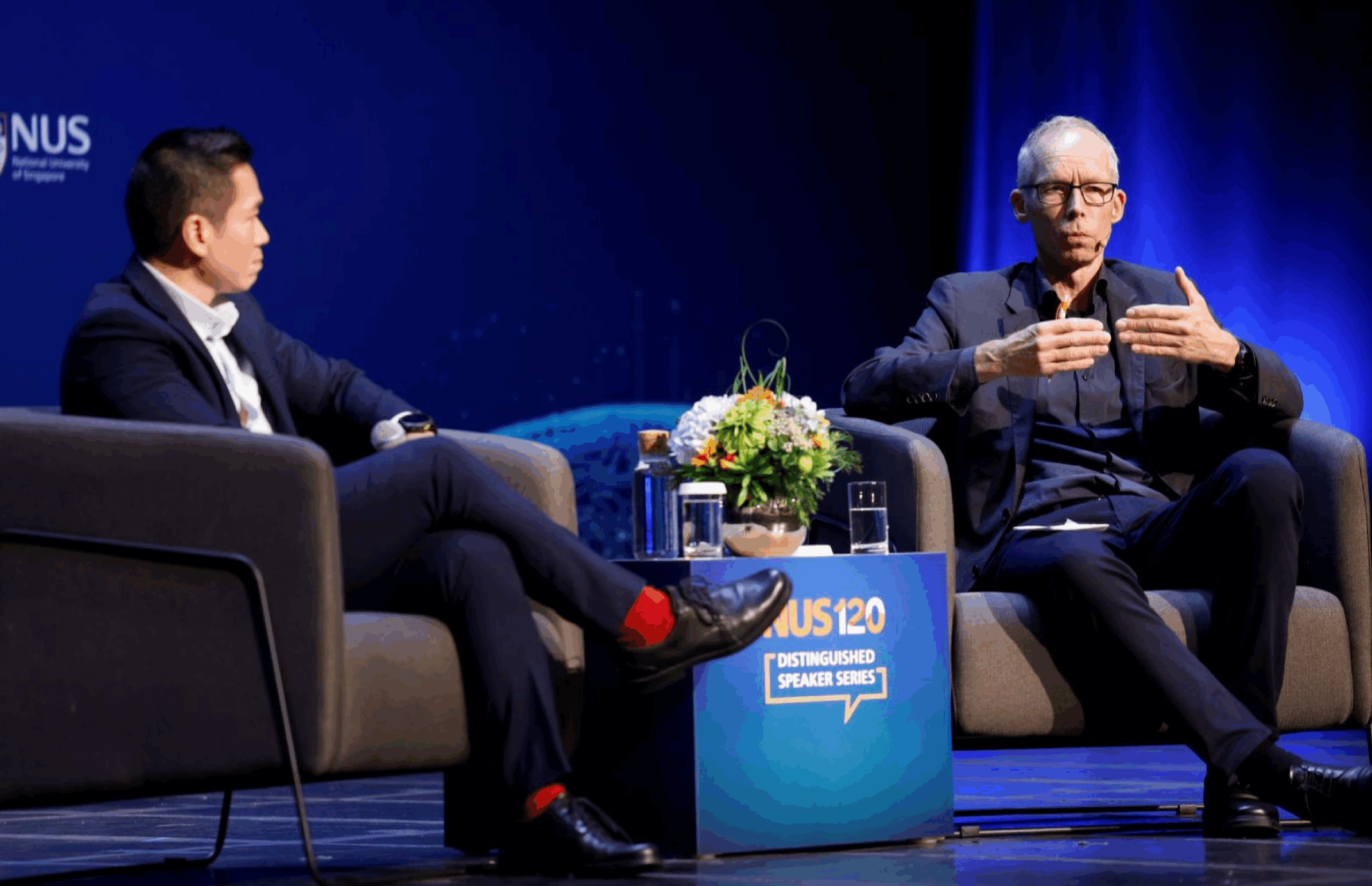
For individuals to become active contributors to climate action, they must first understand the gravity of the crisis and be empowered with the knowledge to tackle it. And who better to learn from and be inspired by than the world’s leading scientists.
In celebration of NUS’ 120th anniversary in 2025, the university started the NUS120 Distinguished Speaker series. Among its line-up of renowned academics were leading Swedish scientist Professor Johan Rockström and Nobel laureate Professor Steven Chu.