Translating Knowledge into Practice
To take on the sustainability challenges of the future, Singapore needs to nurture a pipeline of green talent competent in the emerging fields of carbon markets, sustainable healthcare, low-carbon fuels like hydrogen, and more.
One way NUS supports this effort is through the NUS Sustainability Academy. The Academy, which is a part of NUS Sustainable Futures, is a one-stop shop for continuing education and training programmes spanning climate, nature, energy, green finance, and other sustainability topics. It coordinates and develops a pipeline of courses, partnering with schools and faculties across NUS, as well as government agencies and the industry, to upskill learners from the public and private sectors, empowering them to respond to climate challenges and seize emerging opportunities.
On the graduate studies front, an initiative called the Common Pool of Electives was piloted in 2024 and 2025, to encourage more interdisciplinary and multidisciplinary thinking. Under the scheme, each sustainability-related master’s programme sets aside a limited number of seats in a chosen course per semester, for students from other sustainability-related master’s programmes.
NUS also introduced several new education programmes in 2025. The new Professional Certificate in Carbon Services and Trading teaches individuals about developing and managing various types of carbon projects, and trading carbon credits.
Meanwhile, the NUS Centre for Sustainable Medicine launched the Master of Science in Sustainable Healthcare — the first of its kind in the world — and the Executive Fellowship in Sustainable Healthcare to equip healthcare professionals and senior healthcare leaders with the knowledge and skills to deliver quality care for patients, while decarbonising their health systems.
Finally, the Minor in Hydrogen and Low Carbon Technology and the short course titled “Introduction to Hydrogen Energy” educates students on the latest in hydrogen and low-carbon technology.
Taken together, they represent NUS commitment to keep pace with the evolving sustainability landscape, and to support Singapore’s sustainability agenda.
Highlights in Numbers
Undergraduate Education (AY2025)
Postgraduate Education (AY2025)
Professional and Executive Education (CY2025)1
* Short Courses may be stacked towards Professional Certificates
Enrolment in Sustainability-Themed Programmes
Graduate Employment (CY2025)
Informal Education (As at Dec 2025)
1 Change in Reporting Basis: From CY2025, reporting metrics for Executive Education Programmes and Short Courses will track only those with enrolment, rather than those offered, to better reflect actual execution. Due to this revised methodology, CY2025 data is not directly comparable with previous sustainability reports.
Preparing Professionals for the Complexities of Carbon Markets
They also learn about the latest trends in carbon markets, project development considerations, and scientific methodologies and technologies for carbon accounting and measurements. The Carbon Project Development and the Measurement, Reporting, and Verification courses culminate in group projects, allowing learners to put their skills into practice. The Professional Certificate also connects learners with experts and market players.
Participant Ms Li-Ling Ch’ng, who co-leads the Environmental, Social & Governance Practice at RHTLaw Asia LLP, praised the course for its quality. “The group project was a fantastic way to help us apply what we learnt in class,” she added. “It was not easy at all, but so rewarding for me in understanding just a fraction of how complex measuring, reporting, and verifying a [carbon] project is.”
As carbon markets continue to evolve, programmes like this help ensure professionals are better equipped to engage with emerging standards, tools, and practices.
“The course has equipped me with practical tools and frameworks that I can directly apply to my work in developing and managing carbon projects.”
Mr Ben Tan
Manager at the Energy Department in Mitsui & Co (Asia Pacific) Pte. Ltd, on the Professional Certificate in Carbon Services and Trading
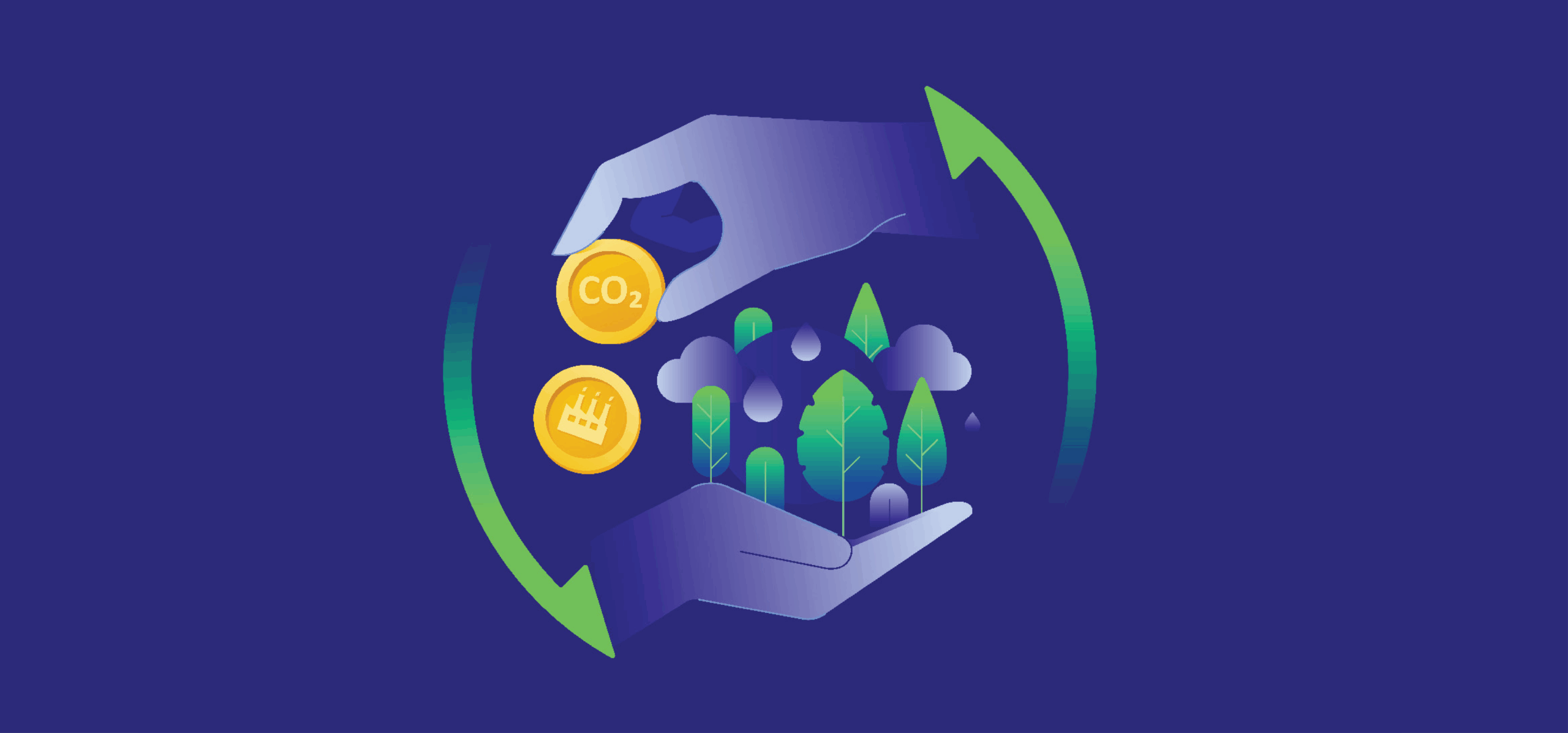
To complement Singapore’s goal of achieving net-zero emissions by 2050, NUS launched a Professional Certificate in Carbon Services and Trading, aimed at professionals already in or entering the industry. Learners acquire skills in developing and managing various types of carbon projects, and in trading carbon credits.
The programme, which runs over eight days, comprises three courses: Navigating Policy Developments and Trends in Carbon Markets; Carbon Project Development; and Carbon Measurement, Reporting, and Verification.
These courses consist of dialogues with academic, industry, and government representatives, giving participants insights into Article 6 of the Paris Agreement, and the eligibility criteria for Singapore’s International Carbon Credit Framework.
New Graduate Programmes in Sustainable Healthcare, Including World's First Master's

The second programme, the Executive Fellowship in Sustainable Healthcare, which also had its first run in 2025, aims to help senior leaders and professionals in healthcare deliver high-quality, climate-ready care for patients and populations. Learners attain a Graduate Certificate after completing two advanced courses on net-zero analytics and implementing net-zero healthcare in the year-long programme, and will be inducted into the CoSM’s Sustainable Healthcare Leaders’ Network upon graduation.
With environmental pressure mounting, CoSM’s efforts to address carbon emissions in healthcare will be essential in ensuring the health and well-being of both patients and the planet.
“The CoSM [team] is devoted to the Fellowship programme, sharing their vast knowledge and skills and helping each Fellow make additional relevant connections with experts as needed.”
Associate Professor Raanan Raz
who attended the Executive Fellowship in Sustainable Healthcare
As climate change drives up the incidence of heat-related, respiratory, and vector-borne illnesses, it also causes the already significant carbon footprint of healthcare to mount.
To equip healthcare professionals and leaders with the knowledge and skills to deliver quality care while decarbonising their health systems, the NUS Centre for Sustainable Medicine (CoSM) announced two new graduate programmes to be offered at Yong Loo Lin School of Medicine at the United Nations Climate Change Conference of the Parties (COP29) in 2024.
They include the world’s first-of-its-kind Master of Science in Sustainable Healthcare (MSc-SH), which had its first intake in August 2025. Students took specialist modules on carbon analytics, the implementation of sustainable healthcare practices, and change management in healthcare.
The programme boasts a world-class faculty of global experts — government leaders, members of the World Health Organization, seasoned professionals from The Lancet medical journal — and an interdisciplinary learning experience with classes from the Medicine, Sustainability and Geography, Engineering, and Public Health faculties. It opens up pathways for a healthcare career in the fast-growing sustainability industry.
Ms Debbie Chan, a student of the first cohort of the MSc-SH, said the programme showed her how resource-intensive the healthcare sector is, and helped her “better contextualise and implement healthcare policy and operational decisions”.
“The CoSM [team] is devoted to the Fellowship programme, sharing their vast knowledge and skills and helping each Fellow make additional relevant connections with experts as needed.”
Associate Professor Raanan Raz
who attended the Executive Fellowship in Sustainable Healthcare
New Hydrogen Energy Education Offerings Support Singapore's Energy Transition
By emphasising interdisciplinary collaboration and effective communication of complex technical concepts, it also prepares graduates for careers in researching, developing, and implementing hydrogen systems across various industries.
CHI has also partnered with the Sustainable Energy Association of Singapore and the NUS School of Continuing and Lifelong Education to conduct a short two-day course for working professionals. Titled “Introduction to Hydrogen Energy”, it provides an overview of hydrogen energy technologies, policies, and global markets. NUS faculty and industry veterans deliver content ranging from fundamentals to global and regional market analyses.
The first two runs attracted close to 30 participants from diverse backgrounds, including engineers, market analysts, and trade association professionals.
As Singapore pivots towards ammonia and other hydrogen carriers as preferred hydrogen storage solutions, NUS has introduced a Minor programme and a short course to cultivate expertise in this emerging sector.
Launched in AY2025, the Minor in Hydrogen and Low Carbon Technology — open to all NUS undergraduates — has attracted about 50 sign-ups. “I signed up because I’m driven to redefine energy through hydrogen and battery innovation, creating pathways towards a sustainable, carbon-neutral world,” said Year 3 Chemical Engineering student Shruti Moovendran.
Offered by the College of Design and Engineering’s Department of Chemical and Biomolecular Engineering, and supported by the Centre for Hydrogen Innovations (CHI), the programme equips students with comprehensive knowledge spanning material science and chemical engineering principles, the latest hydrogen and low-carbon technology from the industry perspective, and chemical process safety.
“With my new certification, I am confident that I can better leverage my chemical expertise and think of novel ways to support Singapore’s rapidly developing hydrogen ecosystem.”